
About the artist
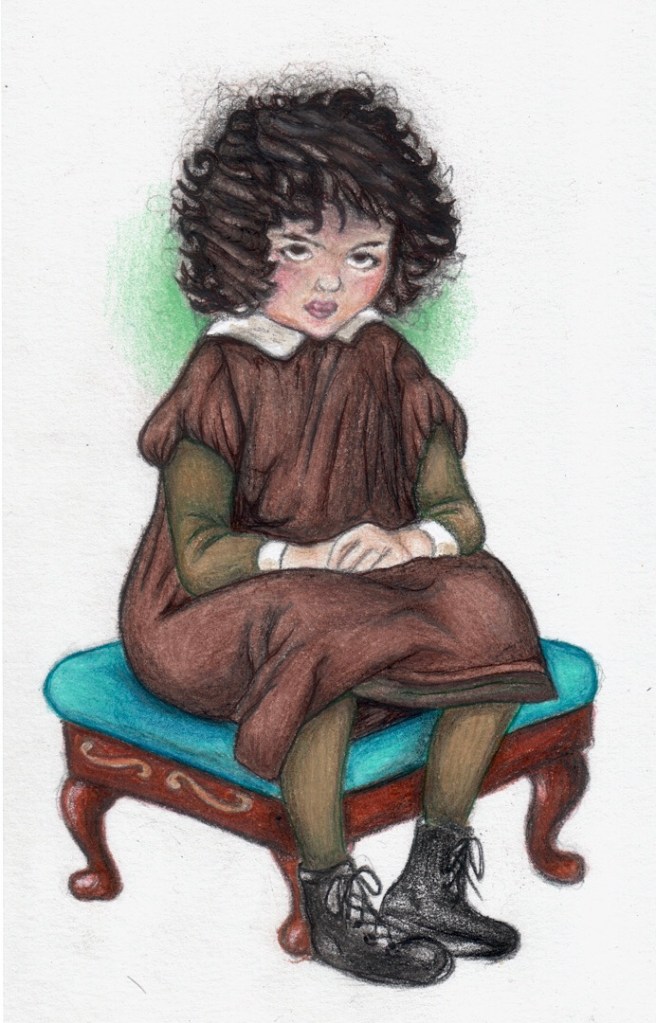
Beth Wilks was born Heidi Elisabeth Lowther in mid-sixties Southeast Vancouver to working class poet activists. She started regularly drawing at age 3, inspired by frequent family trips to the Gulf Islands. Responding to unfolding chaos in the home, she drew with increasing intricacy and concentration, which eased tension and resulted in positive attention in otherwise volatile situations. Her art then became interwoven with developmental trauma as a means of survival. Later, her grandmother, an accomplished landscape artist in oils, taught her shading and drawing from observation, but couldn’t lure her away from the pencil. For many turbulent years, Beth made art sporadically, unable to forge a specific identity or evolve creatively, due to persistent poverty and all too frequent moves. Making art to please others, she gave away most of her occasional work. Seeking new directions required waiting for a backdrop of stability in which to create an authentic voice, a gift which eluded her until midlife.
CreatureStudies, her ongoing look at the sentience of nonhuman life through unique illustrative portraiture, began in 2013, evolving from a fascination since childhood with animals as characters in their own right. Having worked in libraries for over 30 years, her process naturally begins with research. Dozens of anatomical reference photos, books, articles, etc. line her shelves and help her find the essence of her subjects, which, linked cognitively to childhood trauma, still retain elements of the naive: painstakingly rendered fur, feathers, or scales often appear isolated on the page, floating in an empty void, like eidetic memories frozen in time.
With her case of over 250 coloured pencils, collected since the seventies and including rare, discontinued shades, her aim is never to duplicate, but to enunciate our common ground through high detail and careful rendering of facial expression unique to that species. The humble medium of pencil drawing supports this aim, requiring patient layering and increasing complexity of line, until the creature ultimately reveals itself, a process taking between two days and up to several weeks, depending on scale.
With this series Beth seeks to remind the human viewer of the presence, meaning, complexity, and value of the lives of others, each embodying the pinnacle of evolution, and to evoke their remembrance in the context of global-industrial agriculture, deforestation, and human-driven climate emergency.
“I think I could turn and live with animals, they are so placid and self-contain’d; I stand and look at them long and long…. So they show their relations to me and I accept them, They bring me tokens of myself, they evince them plainly in their possession.”
– Walt Whitman
Written on Musqueam (xʷməθkʷəy̓əm), Squamish (Sḵwx̱wú7mesh Úxwumixw), and Tsleil-Waututh (səl̓ilw̓ətaʔɬ) unceded territories (Vancouver), BC.
A Note on Taxonomy: Taxonomy is the systematic classifying of organisms by their phenotypic characteristics. I include the taxonomic nomenclature for the creature in the title of each drawing, as my work references early attempts at artistic description by word of mouth, copied field sketches, and Linnaean classifications by 19th century hobby naturalists. However, I acknowledge the legacy of colonialism pervades here. Often reclassifying creatures to “honour collectors, sponsors, colleagues or employers,” (or even rock stars), taxonomy to this day mainly ignores preexisting Indigenous names, which are frequent “knowledge conduits” in themselves. For more information: https://www.nature.com/articles/s42003-020-01344-y.
– Beth Wilks
Originals and greeting cards available. Prints made to order. Email creaturestudies1@gmail.com.
 CreatureStudies
Beth, Just wanted to send you best wishes. You do beautiful drawings as depicted on a card that Nancy Callan recently gave to her father and I.
LikeLiked by 1 person
That’s wonderful to hear! Thank you so much!
LikeLike